
AI for Business: Driving Innovation and Productivity
26th February, 2026
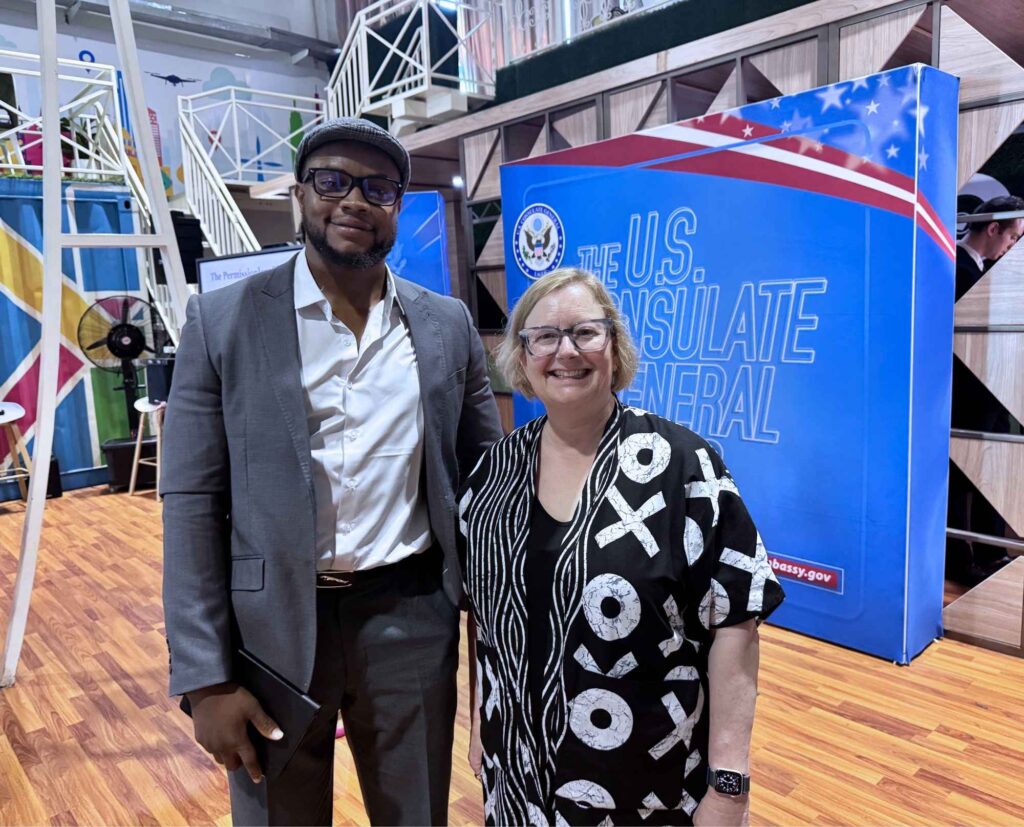
Our co-founder Steve Odinkaru was also an invitee to the U.S. Speaker Program on Artificial Intelligence organized by the U.S. Consulate General in Lagos, themed “AI for Business: Driving Innovation and Productivity”, which held on Wednesday, February 25, 2026 at 21st Century Technologies in Lekki Phase 1, and was attended by tech professionals, business leaders, entrepreneurs and U.S. government exchange alumni.
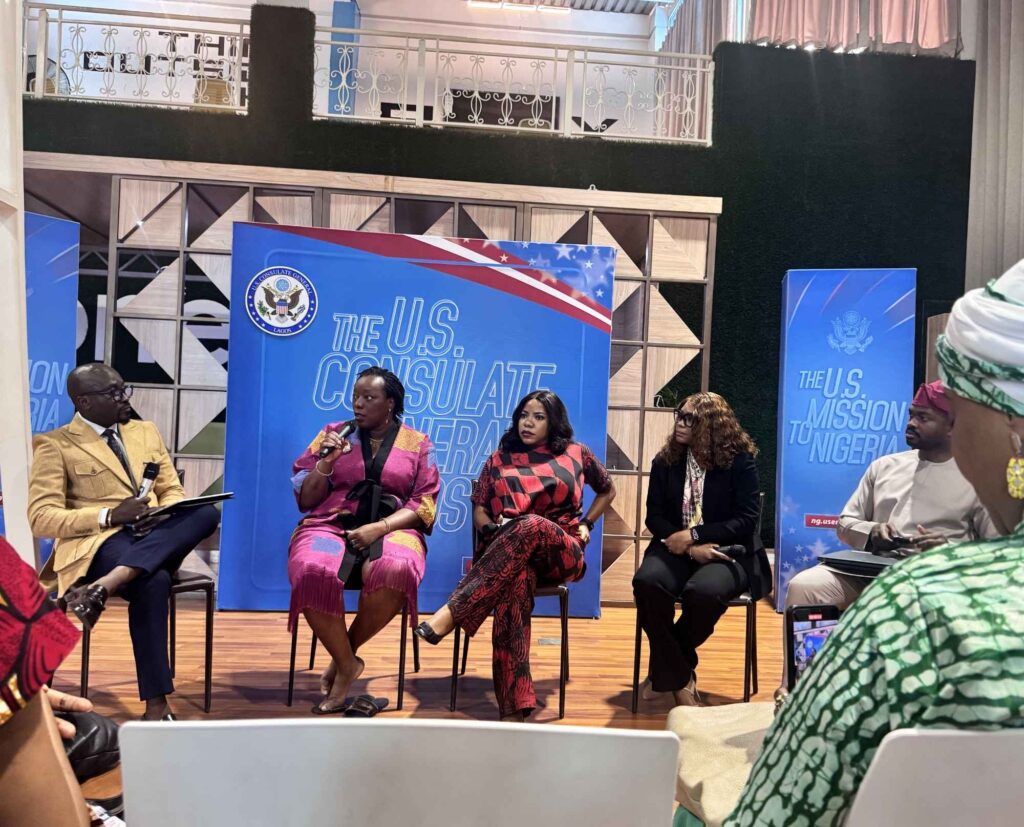
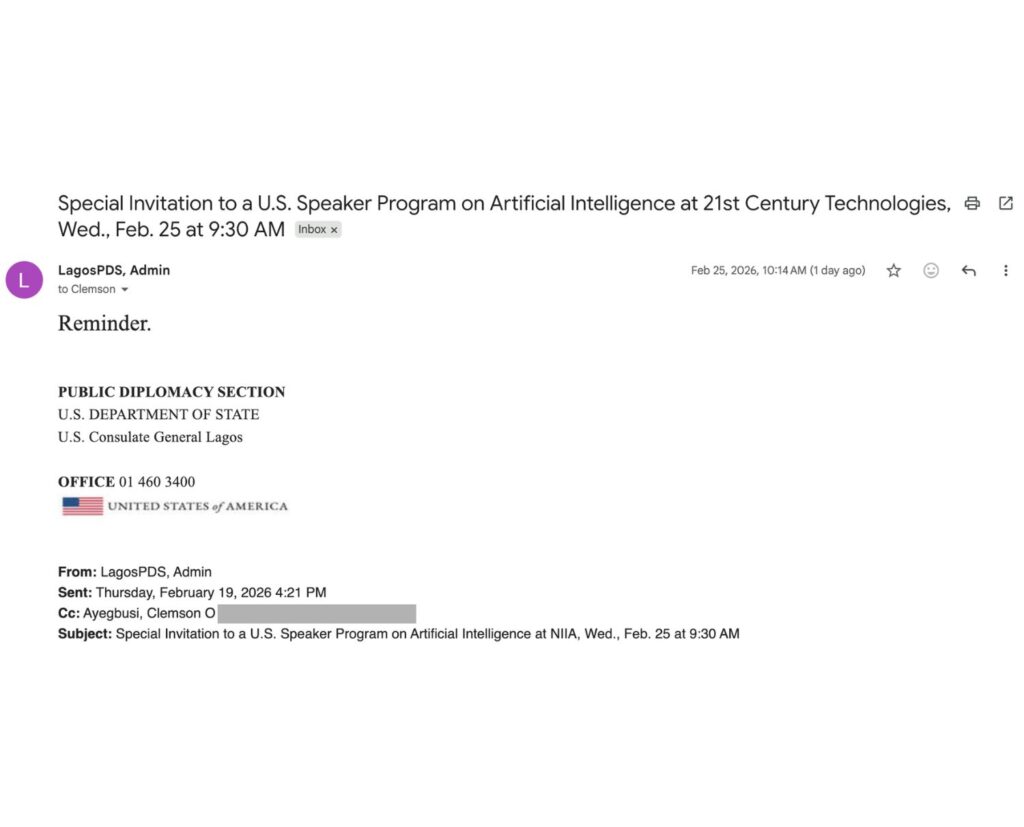
The program was administered by the Public Diplomacy Section of the U.S. Department of State and featured a moderated panel discussion by a U.S. expert, with the keynote speaker being Dr. Omoju Miller, an AI expert and founder/CEO of Fimio, Inc., and representatives from Amazon and National Information Technology Development Agency (NITDA) also in attendance. They discussed the impact of artificial intelligence on business, productivity and national development, because this wasn’t just a tech event, but a space where policy, innovation and entrepreneurship meet. The conversation was how artificial intelligence can go from buzzword to backbone infrastructure for businesses – automating routine tasks, improving decision making, unlocking entirely new products, services and markets – while the panelists were not afraid to explore the harder questions, such as ethics, data privacy, regulation, capacity building, and the risk of leaving people behind in an AI-driven economy. A few things jumped out to us:
1. AI as a growth engine, not a buzzword, because the conversation kept coming back to one thing: AI should be measured by outcomes, not hype.
And while we were all geeking out over the science behind AI, Dr. Miller and the panel were laser-focused on the practical applications – using AI to enhance customer experience, optimize operations and unlock insights from data that businesses are already collecting but underusing – therefore, for us, that means building solutions that solve real problems, such as healthcare access, financial inclusion, agriculture productivity, logistics, education, public services and so on.
2. Talent, skills and the future of work was the second theme that emerged, because AI is only as powerful as the people building and using it, and the speakers stressed the importance of upskilling local developers, data scientists, product managers and decision-makers so that they can design, deploy and govern AI responsibly. Consequently, for us, this reinforced our conviction that building in Africa for Africa means investing in people, not just technology.
3. Responsible AI and trust was also a key theme, because from bias in models to data security, the panel showed trust and responsibility as non-negotiable, and in a world where AI can determine access to credit, healthcare, jobs and information, getting ethics and governance right is critical.
Moreover, we found this particularly relevant to our work, where we work with sensitive and high-stakes data, and the conversation reinforced our commitment to transparency, accountability and strong data protection practices as we scale. 4. Collaboration between government, corporates and startups was another important theme, because the presence of NITDA and Amazon alongside a U.S. AI founder highlighted how much AI innovation depends on collaboration, and there are different roles to be played by regulators, big tech, and startups.
While startups have the advantage of speed and new ideas, big tech has the infrastructure and reach, and regulators provide the guardrails and long-term vision, and this event was a way of showcasing how these different pieces can fit together in creating the right environment for AI to help drive inclusive growth in Nigeria. However, attending this event, through Steve’s participation, is the kind of engagement we believe is necessary for building a responsible, impactful technology company, because we are building at the intersection of technology, real-world challenges, and human lives. Sitting in a room where policy, global best practices, and local realities are being openly discussed helps us sharpen our thinking around product design, partnerships, and long-term impact, and it was also a reminder that Nigeria is not only a consumer of technology, but an active contributor to global conversations around AI.
With voices like Dr. Omoju Miller and Nigerian stakeholders on the same panel, it is clear that our ecosystem is increasingly recognised as a place where meaningful AI innovation can emerge, and looking ahead, we are grateful to the U.S. Consulate General Lagos and the Public Diplomacy Section for the invitation and for creating a platform that connects local innovators with global experts and institutions. Therefore, the insights from “AI for Business: Driving Innovation and Productivity” will continue to shape how we think about building AI-powered solutions that are safe, useful and scalable, and as we move forward, we are even more committed to building AI solutions that solve real problems for businesses and communities, embedding responsibility, transparency and ethics into our technology, and partnering with institutions, corporates and fellow innovators who share a vision for using AI as a tool for inclusive growth. Consequently, this is just the beginning of a longer journey, and we are excited to keep learning, collaborating and contributing to the future of AI in Nigeria and beyond.